How to do it
Wind vanes
This diagram shows you how to make a wind vane. Use a piece of cardboard from a manilla folder, and sticky-tape a washer (or a coin) to the front end. Then find the balance point by sticking a pin in until you get it right, and tie on a piece of cotton.
When you hang this, it will point to the direction the wind is coming from, but if you walk around with it in front of you, it will always point in the direction you are going.
This will help you understand Back to the index
A toy "tank"
You will need a wooden cotton reel, a small wood saw, a large rubber band about 100-120 mm in circumference, a stick or pencil about 10-15 cm long, a small (shorter than reel diameter) nail, and a slice from the base of a candle with a hole in the centre.
What you do:
This is an old traditional children's toy that still fascinates. Use a tenon saw or similar to cut a V-shaped groove across the centre of one end of the reel, then thread the rubber band through the hole in the reel. Slip the nail through the rubber band and settle it into the slot. Slip the candle slice over the rubber band at the other end, and put the stick through the rubber band. Wind the stick around until the rubber band is quite tight, then put the cotton reel down and watch it run.
This will help you understand
comeback.gif - 3301 Bytes The comeback tin
Another old favourite. This one calls for a coffee tin, a drill, a length of elastic, cotton thread or string, and a small weight. Drill two holes in the lid of the tin, about 50 mm apart, and two matching holes in the base of the tin. Thread the elastic through the base holes, and also through the holes in the lid, and tie the ends. Then tie the two sides of the elastic together with the string, and use the string to tie the weight tightly to the elastic.
Take the two ends of the elastic up through the lid holes, put the lid on the tin, and tie off the two ends. Roll the tin away from you: this should "wind up" the elastic, causing the can to roll back again. This can be quite mystifying to those seeing it for the first time.
This will help you understand
Inertia bricks
What you need:
You will need a strong stand (or a timber beam between two tables or chairs), several bricks, strong cotton thread (some testing will be needed).
What you do:
Hang one brick by the cotton, and then hang a second piece of cotton from the first brick. Tie on a second brick and let it drop (WATCH YOUR TOES!). The thread breaks between the two bricks. Now repeat, but dangle the second brick gently: with the right strength cotton, you will now get a break above the first brick. The inertia of the first brick protected the top cotton in the first case, but not in the second case. If this does not work, dangle two bricks and drop a third: keep escalating until you get a result!
This will help you understand
Resonant pendula
You will need:
Two supports that will hold up a horizontal slack string, several lengths of string, and some small masses.
What you do:
Dangle two of the masses from the slack string by lengths of string, making sure that the strings are the same lengths. Set one pendulum swinging, and watch what happens after a few minutes. Now add another mass on another string, and experiment: is there a transfer of movement when the lengths are different? When the masses are different? When there are several hanging on the one system?
This will help you understand
Coupled pendula
What you need:
Very fine wire spring, two identical heavy pendula on stands
What you do:
Hang the two pendula on their separate stands, and join them, near the bottom, by a very fine, loosely coiled spiral of wire. Set one swinging, and watch what happens.
This will help you understand
Lissajous figures
To Australians, the Lissajous figure (or one of them, at least) is familiar as the logo of the ABC. Lissajous figures arise when two simple harmonic motions interact at right angles to each other, so long as the periods of the two motions are in a simple mathematical relationship, such as 3:2.
This is the simplest way to generate these figures, just by having a cup which dribbles sand, suspended as shown in the diagram.
This will help you understand
Torsion pendulum
What you need:
Some piano wire, two tables, a length of 4" x 3" or 3" x 2" timber (that is, 100 x 75 mm or 75 x 50 mm), about two metres long, a metre length of 2" x 1" (41 x19 mm) dressed timber, drill and drill bit, pliers or wire cutters, and a couple of weights. Piano wire might be hard to get: hardware stores sometimes sell it. You will be able to make do with fencing wire or baling wire, so long as the pendulum does not swing too far from side to side. You may want a couple of clamps to hold the whole rig on the tables: if you do, be sure to use scrap timber to protect the tables from the jaws of the clamps, or somebody will get angry !
What you do:
Drill two holes close together through the larger piece of timber, and cut off about 800 mm of the wire. Push some of the wire through one hole, bend a right angle in it, and then another, so that you can ram the short end down into the second hole (the main thing is to have the wire attached in such a way that it is unable to rotate.) Then attach the 2x1 timber to the other end of the wire, with the long end of the wire going carefully through a centre hole, and up through a second hole, to one side. Now sling the support beam between two tables, add some weights, twist the smaller piece of timber sideways, and let go.
This will help you understand
Natural dyes
A word of warning: aluminium saucepans and pots have a very thin layer of aluminium oxide which will bond tightly to some of these organic dyes. Use an old pot, or one that does not matter!
Many natural dyes can be made from things you buy at the greengrocer's shop or the florist's. Beetroot, onion skin, carrot, rhubarb, spinach, many colourful flowers and berries, tea and coffee are just some of the things you can use. Many kinds of tree bark are also useful for brown dyes.
You need to chop or grind whatever you are trying, bring to the boil and simmer for half an hour or so, adding more water as some evaporates off, then dip in a test square of cloth and leave it for fifteen minutes, then hang it out to dry.
The uptake of dyes can be improved with a mordant. Add half a teaspoon of ordinary alum to about 500 mL (just under a pint) of water in a plastic container, and dissolve it. Then make up 500 mL of diluted household ammonia, and add it to the alum solution: this will produce a gel of aluminium hydroxide, which clings to both the fibres and the dye.
This will help you experiment further
Time heals all wounds
Find a small-necked, corked glass bottle and balance an ice cube on top of the cork. Cut a 40 cm piece of thin, strong wire and tie a hammer to each end. Balance the wire across the middle of the ice cube. What do you think will happen? Try it!
You may like to stop and wonder why you need to use a glass bottle and a cork (there is a reason!!).
You may also like to note that the "standard" explanation for this demonstration is probably wrong!
This will help you understand|Back to the index
Gyro
Tie one end of a long piece of string to the middle of a matchstick. Pull the other end of the string up through the hole in the centre of an old-fashioned vinyl record (so the matchstick is centred underneath the hole). Try to swing the record backwards and forwards like a pendulum in smooth, even movements. Now give the record a spin. What will happen when you try to swing the record again? Test your hunch.
Does this remind you of riding a bicycle? (It should!)
This will help you understand|Back to the index
Hero was here!
Poke a hole in the bottom left hand corner of each of the four faces of a large paper milk carton. Poke an extra hole in the top flap of the carton and tie a string through it. Hang the carton from the string. Cover the holes with your fingers and pour water into the carton. What will happen when you remove your fingers from the holes?
Find out who Hero of Alexandria was! Work out what this question has to do with a spinning milk carton.
This will help you understand|Back to the index
Treading on eggshells
Carefully break off the small end of four eggs and pour out the insides. Wind a piece of sticky tape around the centre of each eggshell. Cut through the centre of the tape to make four dome-shaped shells (discard the broken end of each shell). Lay the four domes on a table with the cut sides down arranged in the shape of a rectangle. Next, guess how many telephone books you can lay on top of the shells before they break. Try it!
This will help you understand Back to the index
Soak Some Spuds
Slice a small potato lengthwise into several pieces that each have two flat sides. Place some of the pieces in one dish and the rest in another. Fill both dishes with water. Add two tablespoons of salt to one of the dishes, and label it "salt water." Let the potatoes soak for 15 minutes.
Compare the potatoes. Is there a difference in firmness? Why?
This will help you understand|Back to the index
Mobius strips
Cut a 5-cm strip lengthwise from an old newspaper. Holding the strip out straight, give it a half twist (180 degrees) and glue the two ends together. Take a pen and carefully draw a line along the centre of the strip. Where do you end up? Is the line drawn on the inside or outside of the paper? Now cut the strip along the line you drew. How many chains do you get? Now try cutting a half-twist strip, one-third of the way from one edge.
There are some more mathematical things to be found here
This will help you understand|Back to the index
Getting the bird in the cage
Draw a picture of your favorite bird on a small index card. On another card the same size, draw a cage. Now tape the two cards, drawing sides out, on opposite sides of a pen. Spin the pen between your hands or fingers. Is your bird still free or did you catch it and put it in the cage?
This will help you understand|Back to the index
Strange matter
Mix one and one half cups of cornflour with one cup of water in a bowl. Slowly dip your finger into the gooey mixture; then try slapping it hard with your hand or a heavy spoon. What happens? Why?
Then try letting some of the goo flow across a piece of rubber sheet cut from a rubber glove. Stretch the rubber slowly, then stretch it fast, and notice what happens each time.
Get a pair of scissors, and pour some of the mix from a spoon. Can you snip the stream with the scissors? (Think: would I ask you this if you couldn't do it, somehow?)
This will help you understand|Back to the index
Density stacker
How? Pour one-third cup of golden syrup (cocky's joy, molasses or treacle) into a glass jar followed by one-third cup of cooking oil. Then pour in one-third cup of water. Drop in a piece of plastic, followed by a grape, followed by a small cork. What happens? Why?
This will help you understand|Back to the index
Fire extinguisher
Place a short candle, a slightly taller candle, and a small dish or small glass filled with baking soda in the bottom of a large bowl. Both candles should be below the top of the bowl. Light both candles. Then pour vinegar into the dish of baking soda. Observe the foaming reaction. What happens to the candles? Why? In what order?
This will help you understand|Back to the index
Dancing raisins
Fill a glass or bottle half full with soda water. Drop three or four raisins into the water. Wait. What happens? Why?
This will help you understand|Back to the index
Cartesian diver
Fill a plastic bottle almost to the top with water. Attach a small piece of clay on the clip of a plastic pen cap. Place the cap in the bottle so it floats and seal the bottle tightly. Squeeze the sides of the bottle. What happens? Why?
This will help you understand|Back to the index
No Sucker
Fill a small jar with water. Poke a hole in the lid big enough for a straw. Put a straw into the water through the hole in the lid and seal up the space around the straw with Plasticine. Now try to suck water through the straw. Be sure there are no leaks. What happens? (Or doesn't happen?)
This will help you understand|Back to the index
What's in a leaf?
Fill a bottle with water to within about 2 cm from the top. Take a freshly cut leaf, wrap clay or Plasticine around the stem and place the stem into the bottle. Make sure the clay fits snugly around the mouth of the bottle. Poke a hole through the clay, and insert a straw. Press the clay around the straw and bottle opening so that no air can escape. The straw should not touch the water. Stand in front of a mirror and suck the air out of the bottle with the straw. (This is hard to do if there are any leaks.) What do you observe in the mirror?
There are some more enquiries about living things to be found here
This will help you understand|Back to the index
Hovercraft
You will need a balloon, a cotton reel (or better still, a cork), a cork borer, some glue, a small sheet of hardboard (or laminate or similar, but NOT cardboard), a saw, and a drill. Carefully cut a disc from the hardboard and drill a small hole through the centre. Bore a larger hole through the centre of the cork and glue it, wide-side-down to the centre of the piece of board, gluing it to the less smooth surface. When the glue is set, blow up the balloon, fit to the cork, and place the whole lot on a smooth table, or a larger piece of laminate. The balloon has a limited life span as an air source, but it does not make the model spin as an electric motor would.
This will help you understand and give you other ideas|Back to the index
Getting an egg into a bottle
Drop three lit matches into a glass bottle that has a narrow neck (an old-style 600 mL milk bottle works well). Quickly put a peeled, hard-boiled egg on the mouth of the bottle. What happens? Why?
This will help you understand|Back to the index
Can you score a goal?
Take an empty, 2-litre soft drink bottle and lay it on its side. Ball up a small piece of paper so that it will fit through the mouth of the bottle. Hold a hair dryer so it blows directly on the mouth of the bottle. Try to push the paper into the bottle using the air stream from the hair dryer. What do you think will happen to the paper?
This will help you understand|Back to the index
Out of sight
Place a coin on a white piece of paper. Put a clear glass filled with water on top of the coin. Can you see the coin? Where is the best place to see it? Now place a saucer on top of the water glass. Try to find the coin without looking straight down through the water glass. Can you do it?
There are some more enquiries about sight and light to be found here
This will help you understand|Back to the index
Racing jars
Take two identical clear-glass jars, leave one empty, and fill one with water. Put the lids on both jars and tighten. Place a large, three-ring binder on a level floor, and start the jars from the top of the "ramp" the binder forms. Release them and watch what happens. Which one gets to the bottom of the ramp first? Which one rolls the farthest?
This will help you understand|Back to the index
Which coin drops fastest?
Put a coin at the edge of a table. Put the edge of a ruler behind the coin, with the rest of the ruler extending out over the table edge at an angle. Put another coin on the end of the ruler that extends beyond the table edge. Take a second ruler and hit the first ruler (on the edge sticking out beyond the table edge) so that the first coin is thrown off the edge of the table and the second coin drops off the ruler. You have to listen for the results so you want to do this over a hard floor. Listen carefully: Which coin hits the ground first?
This will help you understand Back to the index
Convection snake
Cut a piece of paper into a 6 cm diameter spiral (use the diagram). Cut a piece of thread 15 cm long and tape one end of the piece of thread to the centre of the paper spiral. Position a desk lamp so that the light points upward. Ask an adult to hold the paper spiral by the thread about 10 cm above the light. (Caution: Do not allow the paper to touch the light bulb.) What happens?
This will help you understand| Back to the index
Steel heat
Put a sensitive thermometer in a jar and close the lid. Wait five minutes and record the temperature. Remove the thermometer from the bottle. Soak half of a steel wool pad in vinegar for one minute. Squeeze excess vinegar out of the steel wool pad and wrap it around the bulb of the thermometer. Place the thermometer and the steel wool into the jar and close the lid. Wait five minutes. Record the temperature. What happened to the temperature?
This will help you understand|Back to the index
Move the cups
Find two disposable cups and some string. Cut the string into two 30 cm pieces. Using tape, attach the end of one piece of string to the bottom of one of the cups, and attach the other end to the edge of a table. Repeat this with the other cup. Position the cups so they hang off the table 4 or 5 cm apart, and at the same height. You might need to adjust the spacing between the cups. Blow between the two cups and see what happens?
This will help you understand|Back to the index
Negative inflation
Fill a plastic (PET) bottle with hot water (NOT boiling water -- see if you can work out why I said that!) and fill a bowl with cold water. Let them sit for one minute, then empty the bottle quickly. Stretch a balloon over the open end of the bottle and push the bottle down into the cold water. What happens? Why?
This will help you understand|Back to the index
Cold boiling water?
Fill a glass three-quarters full with water. Place a handkerchief over the top of the glass and hold it on with a rubber band placed around the rim of the glass. Push down on the centre of the handkerchief until it touches the water (the experiment works best if the handkerchief is slightly wet). Keep your fingers pressed on the handkerchief and turn the glass upside down.
The water will stay in the glass. Now, pull the handkerchief tight, so that the concave shape disappears. What happens? Why? Is it really "boiling"?
This will help you understand|Back to the index
Pile driver
Fill a plastic jar with rice, carefully jab a knife into the rice five or ten times. The rice will settle a bit, then add more rice. Continue until no more rice can be added. Then quickly jab the knife into the rice and lift. What happens? Why?
Can you work out why this item is called "Pile driver"?
This will help you understand|Back to the index
Strange balance
Tie a string in a loop and slip it over a ruler. The other end should twist into a loop and slide over the handle of a hammer resting at the end of its rubber grip. Place the ruler's edge with the hammer head underneath on the edge of a table. The hammer handle should rest against the other end of the ruler. What happens? Why?
This will help you understand Back to the index
A block off the old chip
A "block" is what sailors call a pulley, or a set of pulleys. You can use simple blocks of wood like this with screw eyes and screw hooks to make simple weight-lifting systems. You can screw them into the wood by hand, if you make a small starter hole with a gimlet, a nail or best of all, a drill.
The idea is to fit a thread to link two of the blocks, as you can see in the picture on the right. Try making two blocks like this, set them up, and then test them to see how many standard masses you can lift with a single standard mass. There is more friction here than in a block and tackle with pulleys, of course.
This will help you understand|Back to the index
And now for some help
The tank
Stored energy, friction and the reduction of it with the candle, and also if the cotton reel needs to be roughened up to make it grip the "ground".
Back to the enquiry| Back to the index
Why the comeback tin comes back
The rolling tin stores energy in the elastic, because the weight always hangs down as the tin rolls in one direction. This works best on the sort of coffee tin that has a metal lid that clips into the top of the can. Try making a second one in a clear plastic container, to see how it works.
Back to the enquiry| Back to the index
The inertia bricks
A thick pile of newspapers in a box on the floor will make this a whole lot quieter and safer!!
The idea of inertia is also behind the trick where you take a potato and soak it in water (to make it nice and crisp), then you can spear a drinking straw into it, because of the inertia of the potato.
Back to the enquiry| Back to the index
Resonant pendula
The principle of resonance causes the energy to be transferred from one pendulum to the other, and then back again, provided they are the same length. I have never tried this, but a pendulum should also influence one a quarter of its length (i.e., with half the period), but there should not be the chance to "return the compliment". This is a simple toy which can give you hours of pleasure.
Back to the enquiry| Back to the index
Coupled pendula
Because the two pendula have the same length, this means they have the same frequency. So when the swinging pendulum pulls gently on the other pendulum each swing, it does so at just the right speed to keep transferring energy across.
Think of the timing you ahve to use when you are pushing a child on a swing.
Back to the enquiry| Back to the index
Torsion pendulum
The torsion pendulum has a constant period, regardless of the displacement: try varying the weights, or their placement, and see what the period (one full cycle from stop, through turn through stop through turn back through to stop again) is. You can also try heavier beams on the bottom.
References:
There are only a few of them, but Coulomb developed the theory so he could carry out other experiments, somewhere back around 1820. John Michell used the torsion pendulum to plan an experiment that would weigh the earth -- in the end, the experiment was done by Henry Cavendish. The idea, as Coulomb explained it, is that a very thin wire, which delvers a very weak restoring force, will allow even small forces to be measured. And the beautiful part is that you can use simple mathematics to calculate the restoring force associated with a deflection of just a few degrees!
In the late 1990s, a torsion pendulum was used to prove the existence of something called the Casimir effect. You will have to hunt this one up for yourself.
Back to the enquiry| Back to the index
Lissajous figures
I haven't got round to this one yet. Look it up, write a good explanation, and i will put it here with your name on it :-)
Back to the enquiry| Back to the index
Dyes
There is a great deal of room for experimentation: lichens can be used for colours, blenders can be used to do the grinding and chopping, and it may be that you can do some useful work with a microwave. Try fern stems and fern roots, and experiment with small amounts of vinegar or lemon juice (acid) or dilute ammonia (alkali) to change the colours, as most dyes work as "indicators".
Oak bark is a traditional European and American source, but what about the acorns, or the barks of gums and wattles, or other trees that grow where you live? Many wattles were used in the past as a source of "tanbark", bark from which tannins could be extracted to be used in tanning leather.
You might also like to investigate other mordants, and try the dyes on different types of cloth: what works on wool may not work on cotton, and vice versa.
Back to the enquiry| Back to the index
The cutting wire
Standard explanation:
The pressure of the wire causes the ice to melt beneath it. The wire sinks easily through the melted ice, while the ice above the wire, which is no longer under pressure, refreezes. This scientific principle also applies to ice skating. The pressure that your skates exert on ice causes a layer of water to form under the blades, creating a slick and slippery surface for sliding. (But see "Reality" below.)
The glass of the bottle and the cork are both insulators, so they stop the ice block from melting too fast. The wire, on the other hand, is able to conduct heat (warmth) from the outside. By the way, you need to do this on a cold day: if the temperature is more than about 10 degrees C, the ice block will melt too fast, and it will probably not freeze again! But on days like that, you can probably still get a result with a larger ice block, and a piece of wire with 5 kg weights on either side.
Research problem: would there be a temperature below which you would not see this effect at all? How would you find out if you are right?
Reality:
The change in melting point due to the pressure is so small that the main melting effect in this demonstration comes from heat conducted into the ice along the metal wire. To test this claim, you would need to replace the wire with string or cotton, and maybe try to see what happens at temperatures close to freezing, when the pressure effect will not be changed, but conduction will be reduced to a minimum.
So if the pressure thing doesn't happen that way, why do the skates work? Well, contrary to what most books say, scientists now believe that there is always a thin fluid layer on the surface of ice, so you don't need the "pressure effect". Here is a link to more information on this.
Back to the question
Hero's carton
Newton's Third Law states that every action has an equal and opposite reaction. Water shoots out the holes, and pushes back on the carton with equal force. A turbine is formed as the energy of the moving liquid is converted into rotational energy. This principle was known to Hero of Alexandria (also known to us as Heron of Alexandria).
You can also do this experiment with an aluminium drink can. Make holes near the bottom in about four places with a nail, and in each case, lay the nail over, so the hole will squirt sideways. Cut the top off the can carefully with scissors and hang the can, using fishing line and a fishing swivel, under a flow of water.
Back to the question
The swinging record
The simple answer is that the record has something called gyroscopic inertia, the same thing that stops a toy top from falling over while it spins.
To a scientist, gyroscopic inertia is the property of a rotating object to resist any force which would change its axis of rotation. Once the record is set spinning at an angle perpendicular to the string, it will resist any forces (such as gravity) that try to change that angle.
By the way, I have tried doing this with several Barry Manilow records, and they just don't swing at all.
Back to the question
The supportive eggshells
Arches — even those made of eggshells — are strong because they exert horizontal as well as vertical forces to resist the pressure of heavy loads. The crown of an eggshell can support heavy books because the weight is distributed evenly along the structure of the egg.
Back to the question
Why the potato went floppy
Through osmosis, water moves from areas of low salt concentrations to areas of high salt concentrations. Adding salt to the water creates a higher salt concentration in the dish than in the potato. Consequently, water in a potato that is soaking in salt water migrates out, leaving behind a limp spud!
People often make celery and strips of carrot go crisp by soaking them in fresh water. What happens if you soak these vegetables in salt water?
There are more experiments with living things at this link. There is also an experiment on diffusion which will help you understand osmosis a bit better.
Back to the question
One side of the Möbius strip
Your piece of paper is called a Mobius strip, which is a shape described by a branch of mathematics called topology. When you twisted your strip, the inside and outside became one continuous surface. And when you cut the strip, it became one longer chain but still had only one continuous surface.
Try the experiment again and give the paper a full twist. Then try one and a half twists, and see what happens.
See what you can discover about Klein bottles.
Back to the question. Or you can look at some more number things.
Why does the bird appear to be in the cage?
It appears to be caged because of how your eyes and brain work. When you see the image of the bird, your brain holds onto the image for a short time--even though the image appears and disappears quickly. The same thing happens with the image of the cage. The two images actually overlap in your brain so the bird appears to be in the cage.
The technical name for this effect is persistence. It is what lies behind every movie and every TV program that you see.
Back to the question Here is a link to sight and light , where these ideas are explored further.
Why does the starch do this?
The molecules in the starch are very large compared with molecules of water or other ordinary molecules. When you slap the surface quickly, the get tangled in each other, and this stops them splattering. In this way the mixture behaves more like a solid. If you move them slowly, or let them flow, they can run past each other, and so the starch behaves like a liquid.
You can also use custard powder for this experiment, but watch out, because the custard leaves yellow stains if you spill it on anything. (Custard powder is mainly corn starch.)
Check to see if this yellow colour is an indicator for acids and alkalis.
Back to the question
What puts out the candles?
When vinegar reacts with baking soda, carbon dioxide gas is produced. This gas is heavier than air so it sinks to the bottom of the bowl and slowly begins to fill up the bowl as though it were water. When the level of carbon dioxide has risen to the level of the flame, the flame will go out from lack of air.
Did you notice which candle went out first? Does this suggest anything about how the gas filled the bowl?
When you burn a candle, carbon dioxide is produced, yet this carbon dioxide does not put the candle out. Can you suggest why that might be?
Back to the question
Why do the different liquids stack in layers?
The liquids have different densities. The most dense (golden syrup) will be at the bottom, the least dense (oil) will be at the top, with the water in between. Each object will sink to the level of the liquid that has a greater density than the object. The object will then float on that layer.
The water and golden syrup will mix, which is why you add the oil first, so the water just drifts down and sits on top of the syrup. The syrup will slowly diffuse into the water over time, and vice versa.
Back to the question
Why do the raisins bob to the surface?
Soda water contains dissolved carbon dioxide gas that collects on the irregular surfaces on the raisins. Once enough bubbles have collected, it will actually lift the raisins to the surface where the gas is released into the air, causing the raisins to sink once again.
There are more experiments with bubbles
Back to the question
Why does the pen cap sink?
By squeezing the bottle, you increase the pressure inside, thus forcing more water up into the pen cap. The added water in the cap increases its weight and causes the cap to sink.
You can make this sort of diver in other forms. A partly water-filled eye-dropper will work, and so will a drinking straw, blocked at the top with color and weighted around the outside of the bottom with a larger piece of Plasticine
Back to the question
Why does the egg go into the bottle?
The flames heat the air in the bottle. As the heated air expands, some of it escapes out the bottle. When the matches go out, the air inside the bottle cools and contracts, thus creating a lower pressure inside the bottle than outside. The greater pressure outside the bottle forces the egg into the bottle.
Break up the egg with a skewer to get it out of the bottle again, unless you can think of a safe way to make it pop out in one piece, remembering that thick glass sometimes shatters if it comes in contact with very hot water.
Back to the question
Why won't the paper go into the bottle?
In trying to push the paper into the bottle, you are aiming the air stream at the mouth of the soda bottle. The hair dryer pushes air into the bottle, filling it with slightly compressed air. In fact, the bottle is so full of air that there is no room for anything else to enter -- not even a little ball of paper. If you turn off the hair dryer or aim it away, the air can escape the bottle and there is room for the paper.
Back to the question
How did the coin disappear?
We see objects because light rays reflect off them and into our eyes. But light bends each time it hits a substance of a different density. The light reflecting off the coin must pass through air, glass, and water (all with different densities) to get to your eye but the light bends so many times that by the time it gets to your eye, it looks like it's somewhere that it's not!
Back to the question
Why did the empty jar win?
At first, the water-filled jar moves down the ramp faster than the empty one. This happens because its weight is evenly distributed throughout its volume, thanks to the water inside it. The empty jar's weight is all in the glass outside so it doesn't roll quite as fast. But as the jars begin rolling on the flat surface, the greater weight of the full jar causes friction between the jar and the floor as well as friction between the water and the inside of the jar. The full jar slows down, allowing the lighter, empty jar to take the lead!
A half-full tin of golden syrup will roll down the same slope in a most surprising way. Make sure the lid is firmly on, and make sure the tin is only half-full, or less.
Back to the question
Why couldn't I get any water from the jar?
When you drink from an open glass of water, air pressure allows the water to travel up the straw. When you reduce the pressure inside your mouth (by sucking on the straw), the surrounding air pressure pushes down on the water and forces the liquid up the straw. But when air pressure on the water is blocked (when you seal the jar lid), there is no air pressure to help push the water up your straw. The air can't get to the water to push on it, so it doesn't go up the straw. Regardless of how hard you suck, the water stays where it is!
Back to the question
Why did the coins land at the same time?
The coins start from the same height off the ground and are the same mass and shape, so gravity and air resistance worked on them in exactly the same way. Even if an object is thrown straight out, it will fall to the ground in exactly the same amount of time as an identical object that is dropped - the acceleration toward the ground that the objects experience as a result of gravity causes them to hit at the same time.
Back to the question
Why does air appear at the end of the stem?
There are holes in the leaf called stomates and tiny tubes called xylem which run down the stem. The leaf and stem act as a straw for the plant. As you drew air out of the plant, more air was drawn into the bottle through the stomates and xylem. This is the same system that plants use to move water around.
There are more experiments with living things here.
Back to the question
How does the hovercraft work?
The air flowing from the balloon through the hole forms a layer of air between the hovercraft and the table. This reduces the friction. With less friction, your hovercraft scoots across the table. As a rule, this model works best when you use a thin sheet of laminated material like Formica or Laminex, because the "card" needs to be very flat and quite stiff, although most books listing this experiment say to use carboard. The cork is lighter than a cotton reel, which makes it better.
There could be a good science fair project here for anybody who could work out how to mount a fan-driven blower on this "craft".
Probe
Give yourself a lift! An old-fashioned vacuum cleaner, where you can attach the hose to the "blow" end, can be used to make a hovercraft that will lift a person. You will need a piece of hardboard about 60 cm square, some heavy-duty plastic sheet, a hole saw, the right sort of vacuum cleaner, and some sticky tape.
Drill a hole in the centre of the hardboard to take the vacuum cleaner nozzle. Attach a "skirt" of plastic sheeting, about 10 cm wide, all around the edge of the board: this is used to contain the pressure below the board, allowing the craft to rise higher. Fit the vacuum cleaner and switch on. Fiddle for better results. This size lifted me when I weighed about 60 kg!
For better results, shape the skirt and attach it to the underside, so that it can not blow out on one side, spilling the air pressure. I used masking tape to hold it in place, but there must be better ways: research how they do it on a real hovercraft.
Another thought: try using a cooler fan from a computer, but get some advice about the correct voltage to use (and find out if they use AC or DC), think about why helicopters have a tail rotor, and then think about using four fans.
Back to the question
Why does the paper spiral twirl?
The energy from the light heats the air above it. Warm air is lighter than cool air, so as the air heats up, it rises above the lamp. Cool air moves in to replace the warmer, lighter air. This "convection current" causes the spiral to twirl.
Back to the question
Why did the temperature rise?
The vinegar removes any protective coating from the steel wool, allowing the iron in the steel to rust. Rusting is a slow combination of iron with oxygen. When this happens, heat energy is released. The heat released by the rusting of the iron causes the mercury in the thermometer to expand and rise.
Back to the question
Why do the cups move?
Bernoulli's principle states that in areas where air moves rapidly, pressure is low. Blowing between the cups drops the pressure so the higher air pressure of the surrounding air pushes the cups together.
Back to the question
Why does the balloon inflate into the bottle?
The warm water heats the bottle which, in turn, heats the air inside the bottle after the water is poured out. When the bottle is placed in the cold water, the air inside cools and contracts, causing outside air to be drawn in, pulling the balloon in and inflating it inside the bottle.
Try sitting the bottle back in the hot water again.
Another way to try this uses a balloon, a plastic drink bottle, some plastic tubing, rubber glue, a bicycle pump with the valve of the piston reversed (to suck instead of blow), and a drill.
You will have to drill a hole in the side of the bottle near the bottom, choosing a size which will just take the plastic tubing, and then glue the tubing in place. Hook this up to the pump, or use the connector from an old inner tube, but with the valve removed. Then push the balloon down through the neck of the bottle, and reverse the neck of the balloon down over the outside of the bottle neck. When air is drawn from the bottle, atmospheric pressure is greater, and the balloon "blows up" inside the bottle.
The main problem will be finding a bicycle pump which allows the valve to be reversed. The modern plastic variety does not allow this, so look for and old relic, with a metal barrel which can be unscrewed.
Yet another variation: Try shaking a small amount of very hot water in a bottle to heat the air inside, then quickly fit a balloon to the neck. Then wait a few minutes for things to cool down before you sit the bottle in an ice bath. Some of the pressure inside the bottle will have been a result of water vapour, which now condenses.
Back to the question
Why does the hammer balance?
All objects have a centre of gravity that acts as if all the weight of the object were balanced there. The centre of gravity of the ruler is in the middle, but the hammer moves the centre of gravity of the system to under the table's edge which keeps it from falling.
Back to the question
Why are you able to pick up the jar of rice?
The rice gets more and more packed down by repeated stabs from the knife until the rice is so compact that it presses against the blade of the knife with enough force to overcome the pull of gravity on the jar.
Back to the question
Why does the water appear to boil?
Surface tension prevents the water from seeping through the handkerchief. When you straighten out the handkerchief, the water drops down to a new level, reducing the pressure in the air space at the "bottom" of the glass. The higher air pressure outside the glass forces air to penetrate the handkerchief and bubble through the water. But it's not really boiling!
Back to the question
Why does the wind vane point at the wind?
The balance point for weight is at the front of the arrow, because of the washer (or coin) taped to the front. The balance point of the arrow's area for the wind to push against is further back, so the tail will always swing away from the wind, and the arrow will head into the wind.
Back to the question
How can a block and tackle lift so much?
The block and tackle goes very slowly. With this arrangement, if you pull the outside line down one metre, the mass you are lifting will only go up 25 centimetres, because there are four strings supporting the lower block, and each one shortens by 25 cm. We can lift about four times as much weight as we are pulling with, but only about four times as much: we also have to lift the lower block, and there is some friction to overcome as well, and that means we have to pull a bit harder.
Back to the question
This file is http://www.ozemail.com.au/~macinnis/scifun/miniexp.htm, first created on August 14, 1997, when it was planned to show some teachers how to set up this sort of simple page. Last recordedrevision (well I get lazy and forget sometimes!) was on October 21, 2001.
Worried about copyright? Don't be -- you need to go look at my fine print. Well, maybe you don't after you read the next paragraph, but do it anyhow . . .
* ©The author of this work is Peter Macinnis -- macinnis@ozemail.com.au, who asserts his sole right to the product as it is packaged here, recognising that many of the ideas are common.
* Any non-profit educational or home use is completely acceptable without let or hindrance.
* Copies of this whole file or site may be made and stored or printed for personal or educational use.
Wednesday, September 22, 2010

Home experiments
Exploring Acids and Bases with Red Cabbage Exploring Acids and Bases with Red Cabbage
Use an indicator made from red cabbage juice to determine whether household products are acids or bases.
Exploring Acids and Bases with Red Cabbage
Build an Electric Motor Build an Electric Motor
Most plastics are made in factories, but here's one you can make at home.
Build an Electric Motor
Floating Soap Bubbles Floating Soap Bubbles
Use a heavier than air gas to suspend soap bubbles. This will allow you to more closely examine the unique properties of bubbles .
Floating Soap Bubbles
Chemmiluminescence - Cool Light Chemmiluminescence - Cool Light
Ever played with a Lightstick? In this activity you examine the chemiluminescent reaction that makes a Lightstick glow in the dark.
Chemmiluminescence - Cool Light
Dancing Raisins Dancing Raisins
Use ordinary clear soda to make raisins dance. Learn what's in soda that gives it fizz, and what causes things that are heavier than water to float.
Daning Raisins
Floating and Sinking Bowling Balls Floating and Sinking Bowling Balls
Will a bowling ball sink or float in water? The answer seems obvious, but this experiment will show otherwise.
Floating and Sinking Bowling Balls
Layered Liquids Chemmiluminescence - Cool Light
Use common liquids you can find around your house to make a density column and a rainbow in a glass.
Layered Liquids
Remove Tarnish From Silver Remove Tarnish From Silver
Clean the tarnish off of silverware. You don't need expensive cleaners, just this experiment.
Remove Tarnish From Silver
Build an Electric Motor Build an Electric Motor
Some wire, a couple of magnets, and a battery – and you can build your own electric motor.
Build an Electric Motor
Bernoulli's Principle Bernoulli's Principle
The power of wind is harnessed in this experiment. Suspend a balloon in air without using your hands!
Bernoulli's Principle
Rubber Bands and Heat Rubber Bands and Heat
In this activity you will examine the behavior of rubber as it is affected by heat, a form of energy.
Rubber Bands and Heat
Making Things Glow in the Dark Making Things Glow in the Dark
What makes certain materials "glow" under a black light? This experiment will tell you why.
Making Things Glow in the Dark
Candy Chromatography Candy Chromatography
The color of many candies come from dyes. This experiment will separate some of those dyes out using a process called chromatography.
Candy Chromatography
Fizzing and Foaming Fizzing and Foaming
With just a few household chemicals you can turn a glass of colored liquid into a froth that overflows its container.
Fizzing and Foaming
Needle Through a Balloon Needle Through a Balloon
What is the easiest way to pop a balloon? With a needle of course. Is there a way to put a needle into a balloon without popping it?
Needle Through a Balloon
Fireproof Balloon Fireproof Balloon
A fire can weaken the rubber in a balloon and cause it to burst. In this experiment you will find out how you can hold a balloon directly in a flame without breaking it.
Fireproof Balloon
Soft Water and Suds Soft Water and Suds
Many people have water softeners in their houses. What is the purpose of a water softener? What does it mean to have "hard" water?
Soft Water and Suds
The Collapsing Can The Collapsing Can
How much force does it take to crush an aluminum can? Is there a way to crush a can using only air pressure?
The Collapsing Can
Lumpy Liquids and Squishy Solids Lumpy Liquids and Squishy Solids
Have you ever turned a liquid into a solid just by tapping on it? In this experiment you will make a liquid that behaves in a very unpredictable way.
Lumpy Liquids and Squishy Solids
Sinking and Floating Soda Cans The Collapsing Can
Next time you're at a picnic, look at the soda cooler: some cans float, while others sink. Do this experiment to understand why.
Sinking and Floating Soda Cans
Blue Sky, Red Sunset Blue Sky, Red Sunset
Why does the sky look red during sunrises and sunsets? We can learn why during this experiment.
Blue Sky, Red Sunset
The Cartesian Diver The Cartesian Diver
Create a "cartesian diver" inside a 1 or 2 liter plastic bottle. This diver will sink or float on command!
The Cartesian Diver
Bending Water Bending Water
Static electricity can be a problem whenever the humidity is low. In this experiment you will use static electricity to "bend" water.
Bending Water
Egg in a Bottle Egg in a Bottle
Even though the egg is bigger than the opening of the bottle, you can get the egg to go into the bottle without touching it.
Egg in a Bottle
Electrical Conductivity of Solutions Electrical Conductivity of Solutions
Build your own apparatus to test the electrical conductivity of solutions!
Electrical Conductivity of Solutions
Use an indicator made from red cabbage juice to determine whether household products are acids or bases.
Exploring Acids and Bases with Red Cabbage
Build an Electric Motor Build an Electric Motor
Most plastics are made in factories, but here's one you can make at home.
Build an Electric Motor
Floating Soap Bubbles Floating Soap Bubbles
Use a heavier than air gas to suspend soap bubbles. This will allow you to more closely examine the unique properties of bubbles .
Floating Soap Bubbles
Chemmiluminescence - Cool Light Chemmiluminescence - Cool Light
Ever played with a Lightstick? In this activity you examine the chemiluminescent reaction that makes a Lightstick glow in the dark.
Chemmiluminescence - Cool Light
Dancing Raisins Dancing Raisins
Use ordinary clear soda to make raisins dance. Learn what's in soda that gives it fizz, and what causes things that are heavier than water to float.
Daning Raisins
Floating and Sinking Bowling Balls Floating and Sinking Bowling Balls
Will a bowling ball sink or float in water? The answer seems obvious, but this experiment will show otherwise.
Floating and Sinking Bowling Balls
Layered Liquids Chemmiluminescence - Cool Light
Use common liquids you can find around your house to make a density column and a rainbow in a glass.
Layered Liquids
Remove Tarnish From Silver Remove Tarnish From Silver
Clean the tarnish off of silverware. You don't need expensive cleaners, just this experiment.
Remove Tarnish From Silver
Build an Electric Motor Build an Electric Motor
Some wire, a couple of magnets, and a battery – and you can build your own electric motor.
Build an Electric Motor
Bernoulli's Principle Bernoulli's Principle
The power of wind is harnessed in this experiment. Suspend a balloon in air without using your hands!
Bernoulli's Principle
Rubber Bands and Heat Rubber Bands and Heat
In this activity you will examine the behavior of rubber as it is affected by heat, a form of energy.
Rubber Bands and Heat
Making Things Glow in the Dark Making Things Glow in the Dark
What makes certain materials "glow" under a black light? This experiment will tell you why.
Making Things Glow in the Dark
Candy Chromatography Candy Chromatography
The color of many candies come from dyes. This experiment will separate some of those dyes out using a process called chromatography.
Candy Chromatography
Fizzing and Foaming Fizzing and Foaming
With just a few household chemicals you can turn a glass of colored liquid into a froth that overflows its container.
Fizzing and Foaming
Needle Through a Balloon Needle Through a Balloon
What is the easiest way to pop a balloon? With a needle of course. Is there a way to put a needle into a balloon without popping it?
Needle Through a Balloon
Fireproof Balloon Fireproof Balloon
A fire can weaken the rubber in a balloon and cause it to burst. In this experiment you will find out how you can hold a balloon directly in a flame without breaking it.
Fireproof Balloon
Soft Water and Suds Soft Water and Suds
Many people have water softeners in their houses. What is the purpose of a water softener? What does it mean to have "hard" water?
Soft Water and Suds
The Collapsing Can The Collapsing Can
How much force does it take to crush an aluminum can? Is there a way to crush a can using only air pressure?
The Collapsing Can
Lumpy Liquids and Squishy Solids Lumpy Liquids and Squishy Solids
Have you ever turned a liquid into a solid just by tapping on it? In this experiment you will make a liquid that behaves in a very unpredictable way.
Lumpy Liquids and Squishy Solids
Sinking and Floating Soda Cans The Collapsing Can
Next time you're at a picnic, look at the soda cooler: some cans float, while others sink. Do this experiment to understand why.
Sinking and Floating Soda Cans
Blue Sky, Red Sunset Blue Sky, Red Sunset
Why does the sky look red during sunrises and sunsets? We can learn why during this experiment.
Blue Sky, Red Sunset
The Cartesian Diver The Cartesian Diver
Create a "cartesian diver" inside a 1 or 2 liter plastic bottle. This diver will sink or float on command!
The Cartesian Diver
Bending Water Bending Water
Static electricity can be a problem whenever the humidity is low. In this experiment you will use static electricity to "bend" water.
Bending Water
Egg in a Bottle Egg in a Bottle
Even though the egg is bigger than the opening of the bottle, you can get the egg to go into the bottle without touching it.
Egg in a Bottle
Electrical Conductivity of Solutions Electrical Conductivity of Solutions
Build your own apparatus to test the electrical conductivity of solutions!
Electrical Conductivity of Solutions
Wednesday, September 8, 2010
Google Music, the itune killer?
Google is planning to launch a online music download store and a digital music locker, which enables the mobile users to download and listen to their songs any time.Which seems to coincide with the format used by apple. When Google showed off the idea of Music at this year’s I/O conference, people were eagerly awaiting its official unveiling later in the year.
Why Crimes Are Committed
The focus of Samuel Walker's "Sense and Nonsense About Crime and Drugs" is crime reduction strategies. Some that work, and others that, as the title implies, are nonsense. The fifth edition of the "Criminology" textbook discusses a wide variety of criminal justice aspects, including; who commits crime and why; the history of studying crime and various attempts at reducing and dealing with crime. Criminology is, in essence, the study of why people omit crimes. In some instances, the two books agree, in others, they do not.
Throughout the United States and internationally, many different efforts have been made to understand and combat crime. Some of these attempts are basic and seem commonsense, some are more drastic. An example is the extensive studies of "Career Criminals", and a criminal's careers in general. Career criminals are defined as having more than five contacts with police through their lives. Walker attests that for thirty plus years career criminals have been a concentration of crime control policy in terms of "preventative detention, major offender prosecution programs, selective incapacitation- …aimed at the so called career criminal" (Walker 68). If the causes and reasons for certain individuals to continue committing crimes through adult life are identified, it is thought that they can be reduced, even eliminated, thus reducing crime. Both books reference the same study to make estimations about career criminals. Through an intensive 18 year study performed of Philadelphia males "birth cohorts" (a group of people born in the same year) by Marvin Wolfgang, it was determined that of the 9,945 people studied, 627 (6% of the original cohort) were career criminals. They were liable for over half of all of the total crimes committed and affirmed the belief that chronic juvenile offenders continue to do so through maturity. Researchers cannot pinpoint why some adults choose to continue to commit crimes, while others "mature out" (Walker)...
Throughout the United States and internationally, many different efforts have been made to understand and combat crime. Some of these attempts are basic and seem commonsense, some are more drastic. An example is the extensive studies of "Career Criminals", and a criminal's careers in general. Career criminals are defined as having more than five contacts with police through their lives. Walker attests that for thirty plus years career criminals have been a concentration of crime control policy in terms of "preventative detention, major offender prosecution programs, selective incapacitation- …aimed at the so called career criminal" (Walker 68). If the causes and reasons for certain individuals to continue committing crimes through adult life are identified, it is thought that they can be reduced, even eliminated, thus reducing crime. Both books reference the same study to make estimations about career criminals. Through an intensive 18 year study performed of Philadelphia males "birth cohorts" (a group of people born in the same year) by Marvin Wolfgang, it was determined that of the 9,945 people studied, 627 (6% of the original cohort) were career criminals. They were liable for over half of all of the total crimes committed and affirmed the belief that chronic juvenile offenders continue to do so through maturity. Researchers cannot pinpoint why some adults choose to continue to commit crimes, while others "mature out" (Walker)...
The Top 10 Craziest Science Stuff you didn't know
You can Hypnotize Chickens
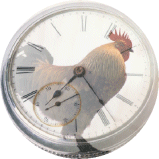 A chicken can be hypnotized, or put into a trance by holding its head down against the ground, and continuously drawing a line along the ground with a stick or a finger, starting at its beak and extending straight outward in front of the chicken.
 If the chicken is hypnotized in this manner, it will remain immobile for somewhere between 15 seconds to 30 minutes, continuing to stare at the line.
You can have an erection once dead
A death erection (sometimes referred to as "angel lust") is a post-mortem erection which occurs when a male individual dies vertically or face-down – the cadaver remaining in this position. During life, the pumping of blood by the heart ensures a relatively even distribution around the blood vessels of the human body. Once this mechanism has ended, only the force of gravity acts upon the blood. As with any mass, the blood settles at the lowest point of the body and causes edema or swelling to occur; the discoloration caused by this is called lividity. Sorry, no photo for this one!
Your hand can have a life of it's own
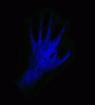 Alien hand syndrome (or Dr. Strangelove syndrome) is an unusual neurological disorder in which one of the sufferer's hands seems to take on a life of its own.
 AHS is best documented in cases where a person has had the two hemispheres of their brain surgically separated, a procedure sometimes used to relieve the symptoms of extreme cases of epilepsy. It also occurs in some cases after other brain surgery, strokes, or infections. The HAND is after you!
Don't laugh too much, it can kill you
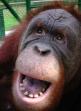 Fatal hilarity is death as a result of laughter. In the third century B.C. the Greek philosopher Chrysippus died of laughter after seeing a donkey eating figs (hey, it wasn't THAT funny).
 On 24 March 1975 Alex Mitchell, a 50-year-old bricklayer from King's Lynn, England, literally died laughing while watching an episode of The Goodies. According to his wife, who was a witness, Mitchell was unable to stop laughing whilst watching a sketch in the episode "Kung Fu Kapers" in which Tim Brooke-Taylor, dressed as a kilted Scotsman, used a set of bagpipes to defend himself from a psychopathic black pudding in a demonstration of the Scottish martial art of "Hoots-Toot-ochaye". After twenty-five minutes of continuous laughter Mitchell finally slumped on the sofa and expired from heart failure. His widow later sent the Goodies a letter thanking them for making Mitchell's final moments so pleasant.
A weapon could make you Gay
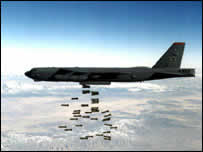 Gay bomb is an informal name for a potential non-lethal chemical weapon, which a U.S. Air Force research laboratory speculated about producing.
 In one sentence of the document it was suggested that a strong aphrodisiac could be dropped on enemy troops, ideally one which would also cause "homosexual behaviour". So that's how they got Saddam!
It's true, Men can breastfeed
 The phenomenon of male lactation in humans has become more common in recent years due to the use of medications that stimulate a human male's mammary glands.
 Male lactation is most commonly caused by hormonal treatments given to men suffering from prostate cancer. It is also possible for males (and females) to induce lactation through constant massage and simulated 'sucking' of the nipple over a long period of time (months).
Bart Simpson's Tomacco (half tomato, half tobacco) was possible
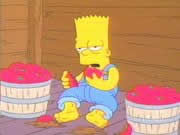 A tomacco is originally a fictional hybrid fruit that is half tomato and half tobacco, from the 1999 episode "E-I-E-I-(Annoyed Grunt)" of The Simpsons; the method used to create the tomacco in the episode is fictional.
 The tomacco became real when it was allegedly produced in 2003. Inspired by The Simpsons, Rob Baur of Lake Oswego, Oregon successfully grafted a tomato plant onto the roots of a tobacco plant, which was possible because both plants come from the same family.
It's OK to have a third nipple
 A supernumerary nipple (also known as a third nipple) is an additional nipple occurring in mammals including humans. Often mistaken for moles, supernumerary nipples are diagnosed at a rate of 2% in females, less in males. The nipples appear along the two vertical "milk lines" which start in the armpit on each side, run down through the typical nipples and end at the groin. They are classified into eight levels of completeness from a simple patch of hair to a milk-bearing breast in miniature.
 You can die on the Toilet
 There are many toilet-related injuries and some toilet-related deaths throughout history and in urban legends.
 In young boys, one of the most common causes of genital injury is when the toilet seat falls down while using the toilet.
George II of Great Britain died on the toilet on 25 October 1760 from an aortic dissection. According to Horace Walpole's memoirs, King George "rose as usual at six, and drank his chocolate; for all his actions were invariably methodic. A quarter after seven he went into a little closet. His German valet de chambre in waiting heard a noise, and running in, found the King dead on the floor."
Picking one's nose and eating it might be healthy
 Mucophagy (literally mucus-eating, also referred as picking one's nose and eating it) is the consumption of the nasal mucus, boogers, and other detritus obtained from nose-picking.
 Some research suggests that mucophagy may be a natural and even healthy activity, which exposes the digestive system to bacteria accumulated in the mucus, thereby helping to strengthen the immune system.
So what crazy science stuff do you know? Comment it!
Interesting Facts - Physics & Chemistry
[- Air -]
The Air around us is not weightless. In fact, it can be weighed almost as accurately as iron or lead. A column of Air 1 inch square and 600 miles high, for instance, weighs approximately 15 pounds, about twice as much as an average newborn baby. This weight is what creates the phenomenon known as "atmospheric pressure."[- Elements -]
Ten of the 105 known Elements had been discovered and were in use in prehistoric times: gold, silver, lead, iron, copper, zinc, tin, sulfur, carbon, and mercury. The largest individual contribution to the table of Elements was that of the nineteenth century English chemist Sir Humphrey Davy, who identified boron, barium, calcium, potassium, sodium, and strontium in 1807 and 1808. He also demonstrated that diamonds are composed of pure carbon and discovered the hilarious properties of nitrous oxide --"laughing gas."[- Sodium -]
If the chemical Sodium is dropped in water and a match is taken to the mixture, it will immediately and violently ignite. If Sodium is immersed in a pot of kerosene, however, it will not burn at all.[- Sound -]
Sound travels fifteen times more swiftly through steel than through air.[- Theory of Relativity -]
According to the Theory of Relativity, the mass of an object increases with its velocity. In nonscientific terms, this means that things get bigger as they move faster. The process has been demonstrated in laboratories. In several experiments, objects accelerated to 86 percent of the speed of light have doubled in weight. The theory also postulates the rather incomprehensible notion that given enough speed, an object will become as large as the universe itself.[- Volume -]
A pipe 2 feet in diameter will allow four times more fluid to pass through it than a pipe 1 foot in diameter-the Volume of a pipe varies as the square of its diameter.[- Water Pressure -]
If you punch a series of holes in a paper cup filled with Water, the Water will squirt out farthest and fastest from the lowest holes. The reason is that Water Pressure is greatest at the bottom of the cup. For the same reason, dams are made thicker at the bottom than at the top.
IBM Vs Mac
Some countries officially have adopted 2 official languages. Within these countries, the languages you speak can often times determine the scope of your rights and responsibilities, and in some cases, determine your status.
In bilingual cultures, monolingual speakers have a definite disadvantage. More and more, we are being confronted with the challenge of bilingual capabilities in a world that has grown far beyond our back yards. Bilingual speakers have an edge and are much better equipped to meet the demands and challenges of any given culture.
It is no different in the digital world and the demand for technology literacy (as yet another language) has grown stronger since the mid-80s. The corporate world has undoubtedly risen to the challenge of technological literacy, but the education world continues to struggle. The dilemna faced within the world of education is relative to the computer platform, the architecture of the hardware, and the associated software with a computer. The struggle centers on decisions relative to using either Apple Computer's Macintosh or the Personal Computer (PC).
The technology boom that we are experiencing now all started in the early 80's when the two separate platforms were born. At first, both platforms seemed to be neck and neck, but that all changed when Apple's team began to design a visual operating system which was adapted from a concept of the Xerox Corporation. Apple's new operating system allowed 'ordinary' people to point and click through their computer. You no longer needed a genius I.Q. to operate a computer. Due to the Mac's ease of use, the public was responding with enthusiaism and Apple seemed to be moving at light speed ahead of their competition.
Early on, IBM Personal Computers were run by a text-based operating system called Disk Operating System (DOS). Tech-oriented people were the only ones who really appreciated DOS. As a result, IBM began to lose market share. Microsoft, the same small firm contracted to DOS for IBM, was contracted by Apple to help them increase their products usefulness. During this time, Microsoft's staff learned the need for simplyfying the technology behind graphical operating systems. Microsoft shook the world when they released Windows, a graphical operating system that ran on IBM Personal Computers.
While the playing field leveled out a little, due to Microsoft Windows, the pendulum then began to swing in the PC's direction (Note: we did not mention IBM). IBM made one simple mistake, they did not patent the technological architecture behind the PC. This seemingly irrelevant move would eventually be the direct cause of Apple's lose of market share. Since IBM did not hold a patent, any company was free to come in and blatantly copy IBM's architecture. That's just what happened! Thousands upon thousands of companies worldwide began to make their own unique spin on the PC, using IBM's architecture. This led to a great deal of competition.
Competition in business leads to innovation and price drops. Corporate America began to take note and it was evident that by the mid-90's, PC's had won the battle. The deciding factors seemed to revolve around price and compatibility. PC's were much cheaper and seemed to be able to do the same thing as more sophisticated computer systems.
While most corporations are seemingly PC, schools seem to be broken on the issue. Most districts do not understand the issues at hand. We'll try to bring you up to speed on where we are and where we are going.
In bilingual cultures, monolingual speakers have a definite disadvantage. More and more, we are being confronted with the challenge of bilingual capabilities in a world that has grown far beyond our back yards. Bilingual speakers have an edge and are much better equipped to meet the demands and challenges of any given culture.
It is no different in the digital world and the demand for technology literacy (as yet another language) has grown stronger since the mid-80s. The corporate world has undoubtedly risen to the challenge of technological literacy, but the education world continues to struggle. The dilemna faced within the world of education is relative to the computer platform, the architecture of the hardware, and the associated software with a computer. The struggle centers on decisions relative to using either Apple Computer's Macintosh or the Personal Computer (PC).
The technology boom that we are experiencing now all started in the early 80's when the two separate platforms were born. At first, both platforms seemed to be neck and neck, but that all changed when Apple's team began to design a visual operating system which was adapted from a concept of the Xerox Corporation. Apple's new operating system allowed 'ordinary' people to point and click through their computer. You no longer needed a genius I.Q. to operate a computer. Due to the Mac's ease of use, the public was responding with enthusiaism and Apple seemed to be moving at light speed ahead of their competition.
Early on, IBM Personal Computers were run by a text-based operating system called Disk Operating System (DOS). Tech-oriented people were the only ones who really appreciated DOS. As a result, IBM began to lose market share. Microsoft, the same small firm contracted to DOS for IBM, was contracted by Apple to help them increase their products usefulness. During this time, Microsoft's staff learned the need for simplyfying the technology behind graphical operating systems. Microsoft shook the world when they released Windows, a graphical operating system that ran on IBM Personal Computers.
While the playing field leveled out a little, due to Microsoft Windows, the pendulum then began to swing in the PC's direction (Note: we did not mention IBM). IBM made one simple mistake, they did not patent the technological architecture behind the PC. This seemingly irrelevant move would eventually be the direct cause of Apple's lose of market share. Since IBM did not hold a patent, any company was free to come in and blatantly copy IBM's architecture. That's just what happened! Thousands upon thousands of companies worldwide began to make their own unique spin on the PC, using IBM's architecture. This led to a great deal of competition.
Competition in business leads to innovation and price drops. Corporate America began to take note and it was evident that by the mid-90's, PC's had won the battle. The deciding factors seemed to revolve around price and compatibility. PC's were much cheaper and seemed to be able to do the same thing as more sophisticated computer systems.
While most corporations are seemingly PC, schools seem to be broken on the issue. Most districts do not understand the issues at hand. We'll try to bring you up to speed on where we are and where we are going.
Strange Things You Likely
A rat can last longer without water than a camel.
Your stomach has to produce a new layer of mucus every two weeks or it will digest itself.
The dot over the letter "i" is called a tittle.
A raisin dropped in a glass of fresh champagne will bounce up and
down continuously from the bottom of the glass to the top.
down continuously from the bottom of the glass to the top.
A female ferret will die if it goes into heat and cannot find a mate.
Chewing gum while peeling onions will keep you from crying.
A 2 X 4 is really 1-1/2" by 3-1/2".
During the chariot scene in "Ben Hur," a small red car can be seen
in the distance (and Heston's wearing a watch).
in the distance (and Heston's wearing a watch).
On average, 12 newborns will be given to the wrong parents daily!
(That explains a few mysteries....)
(That explains a few mysteries....)
Sherlock Holmes NEVER said, "Elementary, my dear Watson."
Because metal was scarce, the Oscars given out during World War II were made of wood.
The number of possible ways of playing the first four moves per
side in a game of chess is 318,979,564,000.
side in a game of chess is 318,979,564,000.
There are no words in the dictionary that rhyme with orange,
purple and silver.
purple and silver.
Astronauts are not allowed to eat beans before they go into space
because passing wind in a spacesuit damages them.
because passing wind in a spacesuit damages them.
The very first bomb dropped by the Allies on Berlin in World War II killed the only elephant in the Berlin Zoo.
Weatherman Willard Scott was the first Ronald McDonald.
If one places a tiny amount of liquor on a scorpion, it will
instantly go mad and sting itself to death. (Who was the sadist who
discovered this??)
instantly go mad and sting itself to death. (Who was the sadist who
discovered this??)
Bruce Lee was so fast that they actually had to s-l-o-w film down
so you could see his moves. That's the opposite of the norm.
so you could see his moves. That's the opposite of the norm.
The first CD pressed in the US was Bruce Springsteen's "Born in
the USA."
the USA."
The original name for butterfly was flutterby.
The phrase "rule of thumb" is derived from an old English law which
stated that you couldn't beat your wife with anything wider than your thumb.
stated that you couldn't beat your wife with anything wider than your thumb.
The first product Motorola started to develop was a record player
for automobiles. At that time, the most known player on the market was Victrola, so they called themselves Motorola.
for automobiles. At that time, the most known player on the market was Victrola, so they called themselves Motorola.
Roses may be red, but violets are indeed violet.
By raising your legs slowly and lying on your back, you cannot
sink into quicksand.
sink into quicksand.
Celery has negative calories. It takes more calories to eat a
piece of celery than the celery has in it to begin with.
piece of celery than the celery has in it to begin with.
Charlie Chaplin once won third prize in a Charlie Chaplin
look-alike contest.
look-alike contest.
An old law in Bellingham, Washington, made it illegal for a woman
to take more than three steps backwards while dancing!
to take more than three steps backwards while dancing!
The Guinness Book of Records holds the record for being the book
most often stolen from public libraries.
most often stolen from public libraries.
The glue on Israeli postage is certified kosher.
Bats always turn left when exiting a cave!
Thanks to Deborah for submitting this!!
And another via email --this comes by Suzie T....
In the 1400's a law was set forth that a man was not allowed to beat his wife with a stick no thicker than his thumb. Hence we have "the rule of thumb"
The first couple to be shown in bed together on prime time TV were Fred and Wilma Flintstone.
Men can read smaller print then women can; women can hear better.
It is impossible to lick your elbow.
The State with the highest percentage of people who walk to work: Alaska
The average number of people airborne over the US any given hour: 61,000
Intelligent people have more zinc and copper in their hair.
The first novel ever written on a typewriter: Tom Sawyer.
The San Francisco Cable cars are the only mobile National Monuments.
111,111,111 x 111,111,111 = 12,345,678,987,654,321
Each king in a deck of playing cards represents a great king from history:
Spades - King David
Hearts - Charlemagne
Clubs -Alexander, the Great
Diamonds - Julius Caesar
Hearts - Charlemagne
Clubs -Alexander, the Great
Diamonds - Julius Caesar
If a statue in the park of a person on a horse has both front legs in the air, the person died in battle. If the horse has one front leg in the air the person died as a result of wounds received in battle. If the horse has all four legs on the ground, the person died of natural causes.
Q. Half of all Americans live within 50 miles of what?
A. Their birthplace.
Q. If you were to spell out numbers, how far would you have to go until you would find the letter "A"?
A. One thousand
Q. What do bulletproof vests, fire escapes, windshield wipers, and laser printers all have in common?
A. All invented by women.
A. All invented by women.
Q. What is the only food that doesn't spoil?
A. Honey
A. Honey
In Shakespeare's time, mattresses were secured on bed frames by ropes. When you pulled on the ropes the mattress tightened, making the bed firmer to sleep on. Hence the phrase......... "goodnight, sleep tight."
It was the accepted practice in Babylon 4,000 years ago that for a month after the wedding, the bride's father would supply his son-in-law with all the mead he could drink. Mead is a honey beer and because their calendar was lunar based, this period was called the honey month, which we know today as the "honeymoon".
In English pubs, ale is ordered by pints and quarts... So in old England, when customers got unruly, the bartender would yell at them, "Mind your pints and quarts, and settle down."
It's where we get the phrase "mind your P's and Q's"
Many years ago in England, pub frequenters had a whistle baked into the rim, or handle, of their ceramic cups. When they needed a refill, they used the whistle to get some service. "Wet your whistle" is the phrase inspired by this practice.
~~~~AND FINALLY~~~~~~~~~~~~
At least 75% of people who read this will try to lick their elbow.
Birth defects
Like most expectant parents, you probably alternate between fantasies about a healthy baby and worries that your baby will have a health problem. Or perhaps you've been told through prenatal screening that your baby may be born with a birth defect.
Many parents assume that all birth defects are severe or even fatal, but the fact is that many are treatable, often immediately after birth — and sometimes even before the baby is born.
It's especially important to know the risk factors involved and how to prevent birth defects. However, it's also important to realize that most babies born with congenital defects are born to two healthy parents.
According to the March of Dimes, about 150,000 babies are born with birth defects each year in the United States. The American College of Obstetricians and Gynecologists (ACOG) says that 3 out of every 100 babies born in the United States have some kind of major birth defect.
Birth defects can be caused by genetic, environmental, or unknown factors.
Structural or metabolic defects are those that result when a specific body part is missing or formed incorrectly or when there is an inborn problem in body chemistry. The most common type of major structural defects are heart defects, which affect 1 in 100 babies in the United States.
Other common structural defects include spina bifida and hypospadias, a condition in which the opening of the male urethra (where urine exits from the penis) is in the wrong place.
Metabolic defects affect 1 in 3,500 babies and usually involve a missing or incorrectly formed enzyme (a protein necessary for processing chemical substances in the body). This type of defect can be harmful or even fatal, but doesn't usually cause any visible abnormalities in the child. Metabolic defects include Tay-Sachs disease, a fatal disease that affects the central nervous system, and phenylketonuria (PKU), which affects the way the body processes protein.
Defects caused by congenital infections result when a mother gets an infection before or during the pregnancy. Infections that can cause birth defects include rubella (German measles), cytomegalovirus (CMV), syphilis, toxoplasmosis, Venezuelan equine encephalitis, parvovirus, and, rarely, chickenpox. None of these affect 100% of babies whose mothers are infected during pregnancy. If the mother is infected during early pregnancy, rubella carries the highest risk for birth defects (approximately 20%).
Other causes of birth defects include alcohol abuse by the mother and Rh disease, which can occur when the mother's and baby's Rh factors (the "positive" or "negative" part of a person's blood type) are different.
Although a few medications can cause problems, none of the 200 most commonly prescribed drugs are associated with a significant risk of birth defects.
Many parents assume that all birth defects are severe or even fatal, but the fact is that many are treatable, often immediately after birth — and sometimes even before the baby is born.
It's especially important to know the risk factors involved and how to prevent birth defects. However, it's also important to realize that most babies born with congenital defects are born to two healthy parents.
About Birth Defects
Birth defects are defined as abnormalities of structure, function, or body metabolism that are present at birth. These abnormalities lead to mental or physical disabilities or are fatal. There are more than 4,000 different known birth defects, ranging from minor to serious, and although many can be treated or cured, they're the leading cause of death in the first year of life.According to the March of Dimes, about 150,000 babies are born with birth defects each year in the United States. The American College of Obstetricians and Gynecologists (ACOG) says that 3 out of every 100 babies born in the United States have some kind of major birth defect.
Birth defects can be caused by genetic, environmental, or unknown factors.
Structural or metabolic defects are those that result when a specific body part is missing or formed incorrectly or when there is an inborn problem in body chemistry. The most common type of major structural defects are heart defects, which affect 1 in 100 babies in the United States.
Other common structural defects include spina bifida and hypospadias, a condition in which the opening of the male urethra (where urine exits from the penis) is in the wrong place.
Metabolic defects affect 1 in 3,500 babies and usually involve a missing or incorrectly formed enzyme (a protein necessary for processing chemical substances in the body). This type of defect can be harmful or even fatal, but doesn't usually cause any visible abnormalities in the child. Metabolic defects include Tay-Sachs disease, a fatal disease that affects the central nervous system, and phenylketonuria (PKU), which affects the way the body processes protein.
Defects caused by congenital infections result when a mother gets an infection before or during the pregnancy. Infections that can cause birth defects include rubella (German measles), cytomegalovirus (CMV), syphilis, toxoplasmosis, Venezuelan equine encephalitis, parvovirus, and, rarely, chickenpox. None of these affect 100% of babies whose mothers are infected during pregnancy. If the mother is infected during early pregnancy, rubella carries the highest risk for birth defects (approximately 20%).
Other causes of birth defects include alcohol abuse by the mother and Rh disease, which can occur when the mother's and baby's Rh factors (the "positive" or "negative" part of a person's blood type) are different.
Although a few medications can cause problems, none of the 200 most commonly prescribed drugs are associated with a significant risk of birth defects.
Computer Gaming World
Computer Gaming World (CGW) was a magazine founded in 1981 by Russell Sipe as a bimonthly publication. Early issues were typically 40-50 pages in length, written in a newsletter style, including submissions by game designers such as Joel Billings (SSI), Dan(i) Bunten (Ozark Software), and Chris Crawford. As well, early covers were not always directly related to the magazine's contents, but rather featured work by artist Tim Finkas. In 1986, CGW increased its publication cycle to 9 times a year, and the editorial staff included well-known writers such as Scorpia, Charles Ardai, and M. Evan Brooks.
In late 1987, CGW introduced a quarterly newlsetter called Computer Game Forum (CGF), which was published during the off-months of CGW. The focus of the newsletter was game design, game hints and scenarios, and game development. The newsletter never really took off and only two issues were published (Fall 1987 and Winter 1987) before it was cancelled. Many of the columns which debuted in CGF, such as Scorpion's Tale and The Rumor Bag, were incorporated into CGW, which went monthly in 1988.
The magazine went through significant expansion starting in 1991, with growing page counts reaching 196 pages by its 100th issue, in November 1992. During that same year, Johnny Wilson became Editor-In-Chief, although Russell Sipe remained as Publisher. In 1993, Sipe sold the magazine to Ziff Davis. Sipe continued on as Publisher until 1995. The magazine kept growing through the 1990s, with the December 1997 issue weighing in at 500 pages. In 1999, Wilson left the magazine and George Jones became Editor-In-Chief, at a time when print magazines were struggling with the growing popularity of the Internet. Jones' time at the head of the magazine was largely undistinguished, and he was replaced by Jeff Green in 2002.
On August 2, 2006, Ziff Davis and Microsoft jointly announced that Computer Gaming World would be replaced with Games for Windows: The Official Magazine.[1] The final CGW-labeled issue was November 2006, for a total of 268 published editions.
Simultaneously with the release of the final CGW issue, Ziff Davis announced the availability of the CGW Archive. The Archive features complete copies of the first 100 issues of CGW, as well as the 2 CGF issues, for a total of 7438 pages covering 11 years of gaming. The Archive was created by Stephane Racle, of the Computer Gaming World Museum, and is available in PDF format. Every issue was processed through Optical Character Recognition, which enabled the creation of a 3+ million word master index. Although Ziff Davis has taken its CGW Archive site offline, the magazines can be downloaded from the Computer Gaming World Museum.[2]
On April 8, 2008, 1UP Network announced the print edition of Games for Windows: The Official Magazine had ceased, and that all content will be moved online.[3]
In late 1987, CGW introduced a quarterly newlsetter called Computer Game Forum (CGF), which was published during the off-months of CGW. The focus of the newsletter was game design, game hints and scenarios, and game development. The newsletter never really took off and only two issues were published (Fall 1987 and Winter 1987) before it was cancelled. Many of the columns which debuted in CGF, such as Scorpion's Tale and The Rumor Bag, were incorporated into CGW, which went monthly in 1988.
The magazine went through significant expansion starting in 1991, with growing page counts reaching 196 pages by its 100th issue, in November 1992. During that same year, Johnny Wilson became Editor-In-Chief, although Russell Sipe remained as Publisher. In 1993, Sipe sold the magazine to Ziff Davis. Sipe continued on as Publisher until 1995. The magazine kept growing through the 1990s, with the December 1997 issue weighing in at 500 pages. In 1999, Wilson left the magazine and George Jones became Editor-In-Chief, at a time when print magazines were struggling with the growing popularity of the Internet. Jones' time at the head of the magazine was largely undistinguished, and he was replaced by Jeff Green in 2002.
On August 2, 2006, Ziff Davis and Microsoft jointly announced that Computer Gaming World would be replaced with Games for Windows: The Official Magazine.[1] The final CGW-labeled issue was November 2006, for a total of 268 published editions.
Simultaneously with the release of the final CGW issue, Ziff Davis announced the availability of the CGW Archive. The Archive features complete copies of the first 100 issues of CGW, as well as the 2 CGF issues, for a total of 7438 pages covering 11 years of gaming. The Archive was created by Stephane Racle, of the Computer Gaming World Museum, and is available in PDF format. Every issue was processed through Optical Character Recognition, which enabled the creation of a 3+ million word master index. Although Ziff Davis has taken its CGW Archive site offline, the magazines can be downloaded from the Computer Gaming World Museum.[2]
On April 8, 2008, 1UP Network announced the print edition of Games for Windows: The Official Magazine had ceased, and that all content will be moved online.[3]
 Computer Gaming World Issue 249 - March 2005 | |
| Editor | Jeff Green |
|---|---|
| Categories | Computing, Gaming |
| Frequency | Monthly |
| First issue | November 1981 |
| Final issue — Number | November 2006 268 |
| Company | Ziff Davis |
| Country | United States, Canada |
| Language | English |
| Website | CGW on the 1UP Network |
2 b known scientist
- -A-
- Ampère, André Marie (1775-1836):
- Ampère, a teacher at Paris, has his permanent place in the history of science because it was his name that was given to the unit by which we measure electrical current. He had, of course, an interest in electricity; in addition, Ampère made similar investigations as did Avogadro into the nature of matter in its gaseous state.
- Alfven, Hannes Olof Gosta (1908- ):
- What I know of Alfven is that he was born in Sweden in 1908; and, while at the Royal Institute of Technology, Stockholm, in 1970, he won the Nobel Prize in Physics "for fundamental work and discoveries in magneto-hydrodynamics with fruitful applications in different parts of plasma physics." I first bumped into Alfven when I picked up a small paperback book of his, which I very much enjoyed, Atom, Man, and the Universe, The Long Chain of Complications (San Francisco: Freeman, 1969). It was written simply and plainly for a general audience, and enables us "to view ourselves both as a part of the atomic microcosm and as part of the universe that dwarfs us."
- Archimedes (287-212 B.C.).
- Forever to be known for the Archimedean principle: "a body plunged in a fluid loses as much weight as ..."
- Avogadro, Armedeo (1776-1856):
- The Italiian scientist after which is named the Avogadro's Law, viz,. "equal volumes of different gases, pressure and temperature being equal, contain the same number of molecules"; or, "equal volumes of gases or vapours contain the same number of molecules."
- -B-
- Bernouilli, Daniel (1700-82):
- Daniel Bernouilli was a member of a Swiss family that had more than its share of mathematicians and scientists. Daniel's father, Jean Bernouilli (1667-1748), was a professor at Groningen (1695) and Basel (1705). Then there was Jean's brother, Jacques Bernouilli (1654-1705), who, in 1698 published his work on differential calculus (he was the one who first used the term integral). Certain of Jean's sons went on to teach at a number of universities located throughout Europe. The son we concern ourselves here with, is, Daniel Bernouilli. Daniel studied medicine and mathematics, but, eventually settled into teaching physics at Basel. He advanced our understanding of the physical world in a number of areas; but, it is in the kinetic theory of gases for which he is most remembered, particularly: the Bernouilli’s principle. It might be simply stated, as follows: "as the velocity of a fluid increases, its pressure decreases." Thus it was Daniel Bernouilli who showed that "the total energy in a steadily flowing fluid system is a constant along the flow path. Because the total energy is constant, an increase in the fluid’s speed must therefore be matched by a decrease in its pressure." The Bernouilli’s principle explains why a fixed wing airplane, once its moving in the air, and, because of the shape of the wing, will (usually) stay in the air. The Bernouilli’s principle might also be demonstrated by looking to a simple instrument to measure wind velocity. The instrument, in its simplest form, is a tube with a ball in it with the tube (the down side end) being closed and the other being open. When the wind blows over the top of the tube, a slight vacuum is created in the tube and the ball is sucked up. The stronger the wind, the greater the suction and the further up the tube the ball will travel.
- Bohr, Niels Henrik David (1885-1962):
- While at Copenhagen University, Bohr, in 1922, won the Nobel Prize in Physics "for his services in the investigation of the structure of atoms and of the radiation emanating from them."
- Born, Max (1882-1970):
- While at Edinburgh University, Born, in 1954, won the Nobel Prize in Physics "for his fundamental research in quantum mechanics, especially for his statistical interpretation of the wavefunction."
- Boyle, Robert (1627-91):
- Robert Boyle was an Anglo-Irish physicist and chemist. Often referred to as the father of modern chemistry. It was Boyle who separated chemistry from alchemy and gave the first precise definitions of a chemical element, a chemical reaction, and chemical analysis. He invented a vacuum pump and used it in the discovery of what has become known as Boyle's law. The principles of Boyle's Law were published in 1662. It goes like this: the volume of a given mass of gas (the temperature being constant) varies inversely as the pressure; or, that the pressure and volume of a gas are inversely proportional. (On the continent it is known as Mariotte's Law; see Edme Mariotte.)
- Brahe, Tycho (1546-1601):
- Brache was the Danish astronomer who had rejected the Copernican theory in favour of that of Ptolemy; and who, having moved to Germany had Johann Kepler as an assistant.
- Bruno, Giordano (1548-1600).
- The scientist, which, for his beliefs, the church burnt at the stake.
- -C-
- Cavendish, Henry (1731-1810).
- The eccentric scientist, after whom the Cavendish Laboratory at Cambridge, England, is named.
- Charles, Jacques Alexander César (1746-1823):
- The French scientist after which is named the Charles's Law which made the connection that a rise in temperature expanded the volume of gas. Charles was to become one of first balloonists.
- Clerk-Maxwell, James (1831-79):
- Clerk-Maxwell was born in Edinburgh. As a boy of fifteen he devised a method of drawing certain oval curves, a method which was written up by the Royal Society of Edinburgh. He attended Cambridge and graduated there as second wrangler. He went into teaching physics; first at Aberdeen (1856) then at London (1860). In 1871, Clerk-Maxwell came back to his Alma Mater, Cambridge, there to become the first professor of experimental Physics. In 1873, he published his great work, Treatise on Electricity and Magnetism. Clerk-Maxwell's greatest work was his initial contribution to electromagnetic radiation.
- Copernicus, Nicolas (1473-1543).
- "Of all discoveries and opinions, none may have exerted a greater effect on the human spirit than the doctrine of Copernicus."
- Crick, Francis Harry Compton (b.1916):
- Crick was born in 1916, at Northampton, England. He studied physics at University College, London, obtaining a science degree in 1937. During the war he worked as a scientist for the British Admiralty. In 1947 Crick left the Admiralty and went off to Cambridge to study biology. In 1954, he obtained a Ph.D.; his thesis was entitled "X-ray diffraction: polypeptides and proteins." A critical influence in Crick's career was his friendship, beginning in 1951, with James Watson; this relationship, in 1953, led to the proposal of the double-helical structure for DNA (Deoxyribo Nucleic Acid). In 1976, Crick joined the Salk Institute for Biological Studies in California, where he became involved in studies on how the brain functions. Crick came to believe that one workings of the brain, as complicated as it surely is, is, however, discoverable. Crick was to conclude that in time a scientific models of consciousness will come about. He writes in his 1994 book The Astonishing Hypothesis: The Scientific Search for the Soul, "Your joys and your sorrows, your memories and your ambitions, your sense of personal identity and free will, are in fact no more that the behavior of a vast assembly of nerve cells and their associated molecules."
- Curie, Pierre (1859-1906) & Marie (1867-1934):
- The Curies, in 1903, won the Nobel Prize in Physics "in recognition of the extraordinary services they have rendered by their joint researches on the radiation phenomena discovered by Professor Henri Becquerel."
- -D-
- Darwin, Charles (1809-82):
- Darwin struck upon the theory of evolution, viz., that all things, reacting to natural laws that we do not fully understand, have slowly evolved over an unimaginable amount of time, into what they are today. This natural law is a process which Darwin called natural selection. Darwin was to hit on a theory, highly supported by real evidence, which meant that we no longer had to subscribe to the notion that every species had been created, by some unknowable means, whole, and then, to have come through the ages unchanged.
- Davy, Sir Humphry (1778-1829):
- Davy's father was a woodcarver. At a young age, Davy was sent to apprentice with a surgeon in his hometown, Penzance. Such an apprenticeship let Davy to conduct chemical experiments and by nineteen years of age he was carrying out some very serious chemical studies. By age 21 he wrote Researches, Chemical and Philosophical which led to his appointment to the Royal Institution. During the early part of the 19th century, Davy was conducting experiments which led to his conclusions that many common substances were formed by the combination of oxygen and metals. This discovery further led Davy to decompose certain substances, and, in the process was to discover metals not commonly found in their pure state, such metals as: potassium, sodium, barium, strontium, etc. In 1812, Davy was knighted. In 1815, Sir Humphry invented the safety lamp, his most famous invention, which undoubtedly has saved numerous lives of those who worked in the coal mines. During the last of his years, Sir Humphry carried out studies in electromagnetism.
- Dulong, Pierre Louis (1785-1838):
- The French chemist who, with Petit, became know for the Dulong and Petit's Law (1819), viz., that "all the chemical elements have approximately the same atomic heat"; or, "the same quantity of heat is needed to heat an atom of all simple bodies to the same extent." In 1813, Dulong was to describe the explosive properties of nitrogen trichloride.
- Einstein, Albert (1879-1955):
- Einstein thought in another dimension, unknown and practicably unknowable to most of us. We may of heard of his Theory of Relativity and his Electromagnetic Theory of Light; but few of us will ever understand them.
- Euclid:
- Euclid was a Greek mathematician; he taught in Alexandria, circa 300 BC. There is evidence that he wrote a number of works, but they have been lost to us. His work, Elements, however, was found, the Arabian mathematicians having carefully preserved it for the rest of us, as western man struggled through his dark ages; it was translated from Arabic into Latin, in 1482. The Elements is yet used today in schools, widely so, as a fundamental text book in geometry.
(Click on letter to go to index.)
-F-- Faraday, Michael (1791-1867):
- Coming from a poor family, Faraday was apprenticed at the age of fourteen to a bookbinder: "he was allowed to spend as much time reading books as he did binding them." One of the books he found himself regularly binding was the Encyclopedia Britannica. After six years of book binding, to his very good fortune, Faraday, at the age of 21, was introduced to Sir Humphrey Davy; he went and joined Davy at the Royal Institution as Davy's personal assistant. (A story describing the relationship of Davy and Faraday would prove to be a mighty interesting one.) At any rate, Faraday led a very illustrious career as a scientist. (In those days they called themselves natural philosophers; and indeed, Faraday was a philosopher: his researches are pointed to as illustrative of the power of the inductive philosophy.) Though there developed quite a dispute over the point, Faraday is generally credited with the discovery of electromagnetic induction (1821), and described certain elements and chemical compounds such as chlorine and benzene.
- Fermi, Fermi (1901-54):
- While at Rome University, in 1938, Fermi won the Nobel Prize in Physics "for his demonstrations of the existence of new radioactive elements produced by neutron irradiation, and for his related discovery of nuclear reactions brought about by slow neutrons."
- -G-
- Galen (c130-201):
- Galen was a Greek physician. He was a careful dissector of animals. He was a voluminous writer and gathered up all the medical knowledge of his times. It is to Galen that we give credit of being, a physician who was to first give a diagnosis by the taking of a person's pulse.
- Galileo (1564-1642).
- Galileo -- astronomer, mathematician and physicist -- dwelt, not on the useless question, why do things happen? but, how do things happen?
- Goethe, Johann Wolfgang von (1749-1832).
- Though a philosopher, Goethe was a scientist carrying out work in biology and in optics. Goethe looked at things in a different manner, different than those thinkers up to his time; "he always attempted to see the individual phenomenon as part of an organic, developing whole ..."
- Gould, Stephen Jay:
- Of course, one should read Prof. Gould's works, as follows: Ever Since Darwin (1973), The Panda's Thumb (1980), Hen's Teeth and Horse's Toes (1983), The Flamingo's Smile (1985), Wonderful Life, and An Urchin in the Storm (1987). Gould's publisher is Norton of New York. As will come as no surprise, Gould's discipline is biology.
- -H-
- Halley, Edmund (1656-1742).
- English mathematician and astronomer.
- Harvey, William (1578-1657):
- The major difference between Harvey and his predecessors, was -- methodology. Harvey determined to start out, so to speak, with a blank fact book and distinguished it from his theory book. Nothing would go down in his fact book unless tested and would readily remove it if it did not bear out on a re-test.
- Hawking, Stephen W.:
- Of course, one should read Prof. Hawking's work, A Brief History of Time (Bantam).
- Haeckel, Ernest (1834-1919):
- Haeckel is known as "Germany's Darwin." He studied medicine but ended up as a zoologist at the University of Jena, where he spent his life's career. "Unlike the always cautious Darwin, who did not speculate on the origin of life or the nature of reality, Haeckel never hesitated boldly to consider the philosophical implications and theological consequences of taking the fact of organic evolution seriously." Like Thomas Huxley "Haeckel saw only quantitative, not qualitative, differences between the living great apes and the rational human animal." Haeckel made a major literary contribution, when, in 1899, he brought out his book, The Riddle of the Universe; "In a scathing attack on religious dogma, Haeckel examines, from a monistic standpoint, the place of mankind within the dynamic, eternal, and infinite universe." My copy is a recent print which was translated by Joseph McCabe with intro by H. James Birx (Buffalo, N.Y.: Prometheus, 1992).
- Haldane, J. B. S. (1892-1964):
- A British biologist, in 1927, Haldane collaborated with J. S. Huxley in the work Animal Biology. Haldane was asked once whether, considering his life long study of this earth's life forms, if he was able to conclude what the nature of the Creator might be; it is reported (Stephen Jay Gould) that he replied, "An inordinate fondness for beetles."
- Herschel, Sir William (1738-1822):
- Born in Hanover, Herschel started out as an oboist in the Hanoverian Guards band; and, as such, made a visit to England. Of course, a fellow Hanoverian, George II (1683-1760) was on the throne of England and Hanoverians were generally welcomed in England. Taking a position as an organist and music teacher at Bath -- the center in England of all that was socially correct -- Herschel was to make England his home. He developed an interest in astronomy. He made, 1773-74, a reflecting telescope; and, then, proceeded to discover the planet Uranus. In 1782, Herschel was appointed as George III's private astronomer. Herschel "greatly added to our knowledge of the solar system, of the milky way, and of the nebulae' he discovered, besides Uranus and two of its satellites, two satellites of Saturn, the rotation of Saturn's ring, the period of rotation of Saturn, and the motions of the binary stars; and made a famous catalogue of double stars, etc." (Chambers.)
- Herschel, Sir John Frederick William (1792-1871):
- This Herschel was to extend the astronomical work of his father. He was educated at Eaton and St. John's, Cambridge. He was to discover numerous nebulae and was one of the first to use photography in his research.
- Hertz, Gustav Ludwig: (1887-1975):
- While at Halle University, in 1925, Hertz won the Nobel Prize in Physics "for his discovery of the laws governing the impact of an electron upon an atom."
- Hipparchus (160-125 B.C.):
- A Greek astronomer who carried out his observations at Rhodes. "He discovered the precession of the equinoxes and the eccentricity of the sun's path, determined the length of the solar year, estimated the distances of the sun and moon from the earth, drew up a catalogue of 1080 stars, fixed the geographical position of places by latitude and longitude, and invented trigonometry." (Chambers.)
- Hippocrates (c460-377B.C.):
- Hippocrates, a Greek, is the most celebrated physician of antiquity. He believed that "the four fluids or humours of the body (blood, phlegm, yellow bile and black bile) are the primary seats of disease." But, it is the ethics of Hippocrates to which, for many years, the medical doctor subscribed by the taking of the Hippocrates Oath.
- Hooke, Robert (1635-1703):
- Coming from the Isle of Wight, Hooke went to Oxford (Christ Church). He was to be a student of Robert Boyle's. In 1662, he became curator of experiments to the Royal Society and, in 1677, its secretary. In 1665 he published Micrographia a book on botany, chemistry, etc. Hooke anticipated the steam engine by describing that bodies of material can be extended or compressed, depending on their elasticity: Hooke's Law. It seems he realized that man might be able to see beyond the edges if only he had better tools; he therefore set out to invent them. To Hooke is contributed, in a material way, the invention of the quadrant, Gregorian telescope and microscope. It therefore should not come as a surprise that many discoveries are contributed to Robert Hooke.
- Huxley, Sir Julian (1887-1975):
- Humanist, atheist and science popularizer, Julian Huxley, a Professor of Zoology, was the brother of Aldous Huxley and grandson of Thomas H. Huxley. Among his works by and about him: Essays of a Biologist (1923) (Pelican, 1939) Ants (1930) (New York, Cape & Ballou, 1932), Evolution: The Modern Synthesis (London: Allen & Unwin, 1942), New Bottles for New Wine (London: Chatto & Windus, 1957), Evolution in Action (Signet, 1964), Evolutionary Humanism (Buffalo, N.Y.: Prometheus, 1992), Memories I (1970) & Memories II (1973) (New York: Harper & Row).
- Huxley, Thomas H. (1825-1895):
- English biologist and teacher, Huxley was a defender of Darwin ("Darwin's Bulldog"). "There are those who hold the name of Professor Huxley as synonymous with irreverence and atheism. Plato's [work] was so held, and Galileo's and Descartes', and Newton's, and Faraday's. There can be no greater mistake. No man has greater reverence for the Bible than Huxley. No one had more acquaintance with the text of scripture. He believes there is definite government of the universe; that pleasures and pains are distributed in accordance with law; and that the certain proportion of evil woven up in the life even of worms will help the man who thinks to bear his own share with courage." (Tyndall's Fragments, advertisement.)
- Huygens, Christiaan (1629-93):
- The Dutch physicist who was to make, in 1657, on the suggestion of Galileo, the pendulum clock. In 1655, he discovered the ring and fourth satellite of Saturn. Huygens had a particular interest in the nature of light and was to propound a theory that it was undulating, thus striking upon, "wave theory."
Subscribe to:
Posts (Atom)